
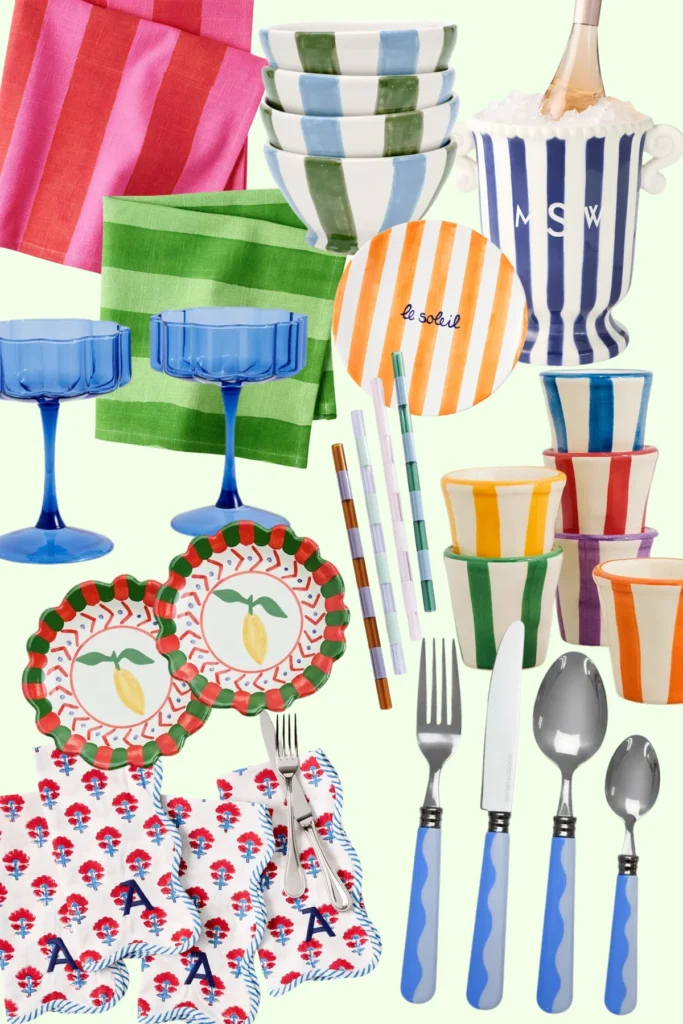
Your kitchen should make you want to be in it. That’s the lesson here: a few bright pieces, chosen for one specific job each, and the whole room changes. No renovation. No painting. Just plates and glasses that do their job and look good doing it.
Cost: one or two small purchases, most under $50. Time: one shopping trip. Skill: being able to say what a piece is for before you buy it.
First, a word on how I picked. I don’t buy a whole new kitchen at once. I pick a job — hosting drinks, a summer barbecue, a family dinner — and find one or two pieces that do that job well. That keeps the budget line honest and stops the cabinet from becoming a landfill for things I used twice. My first attempt at a themed kitchen went in the bin, where it belongs: a set of novelty mugs I bought all at once and used for about a month.
Drinkware: the pieces that stay out on the counter
These are the ones I’d keep visible, because they’re the ones guests notice and reach for.
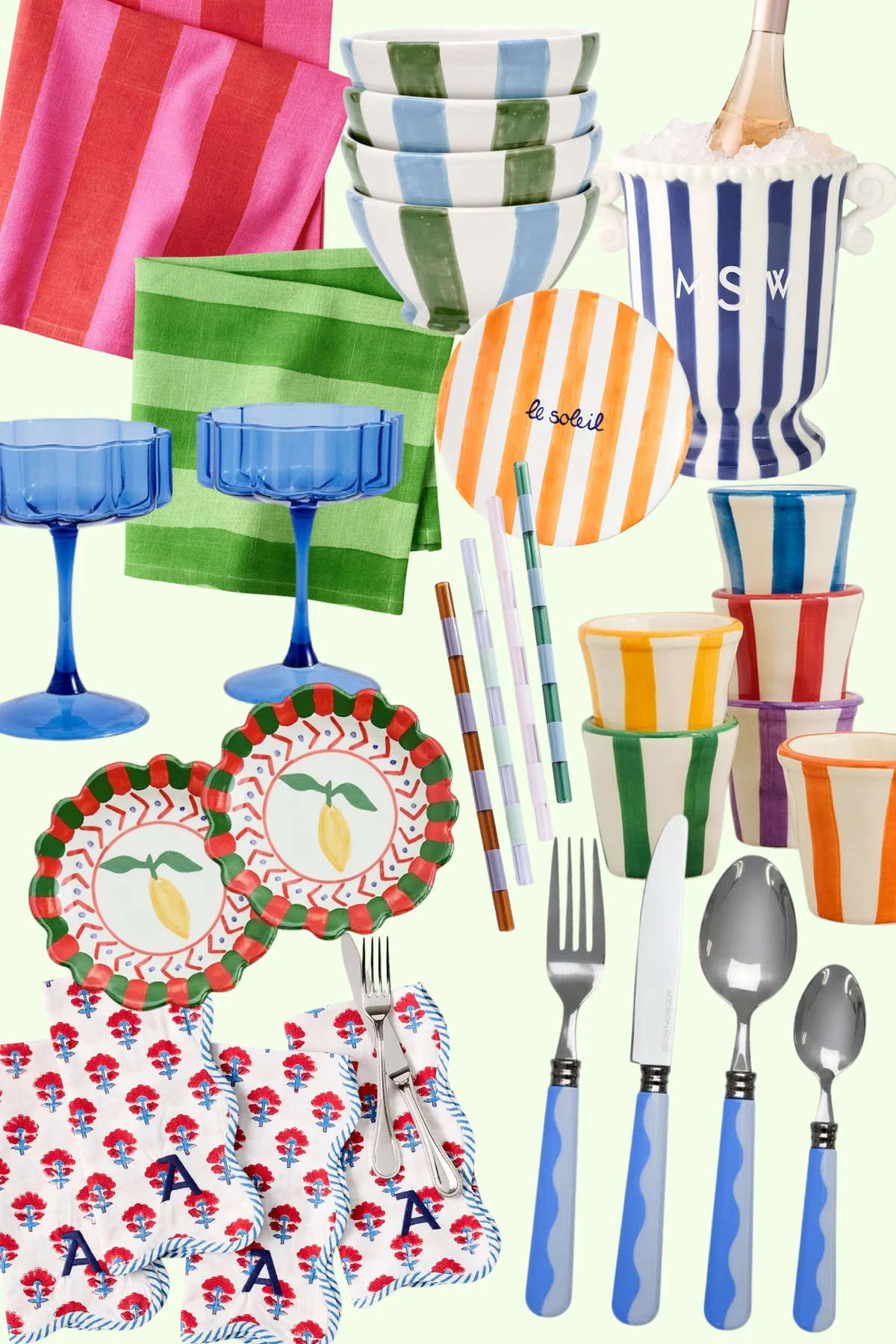
Wave-pattern glasses. The pattern does the work here — no need to match anything else on the table. I’d use these for a grown-up dinner party, not the kids’ table. The glass is sturdy enough for regular washing, which matters more than it sounds.
Espresso cups. If you drink espresso, a small set of cups in a bright color is the cheapest way to make the coffee corner look intentional. The cups are small, which keeps the price low and the commitment small. If you don’t drink espresso, skip this one — a beautiful cup you use twice a year isn’t a good buy.
A striped ceramic wine bucket. Put a bottle of rosé in it on a warm afternoon and the counter becomes the point. It’s not a cooler that keeps things cold all day; it’s a piece that keeps a bottle looking intentional. That’s a fair trade for the price.
Tableware: plates and bowls, sorted by the meal they’re for
Plates are where most people go wrong. They buy a full set before they know what they’re cooking. I buy by meal type instead.
Striped plates. Cheeky patterns are fine for a relaxed dinner; I’d avoid them for a formal one. The stripes are bold enough to stand alone, so you don’t need a matching cloth under them.
Dinner plates and cocktail napkins in a tomato theme. If you like the look of a tomato on the table — and it’s a real thing this time of year, not just a trend — these two pieces together do the whole table for you. Plates and napkins, no other matching required.
Rectangular plates. These are for one job: hot dogs, grilled vegetables, anything long. A round plate makes a hot dog look lost. A rectangular one makes it look deliberate. If you host a barbecue at least once a season, these are the plates to have.
Child-friendly melamine plates. Melamine is the material that survives a summer of outdoor meals. It’s not the most elegant material on the shelf, but it’s the one that doesn’t mind the garden table, the dishwasher, and the toddler’s drop. For outdoor dining in the summer, I’d buy melamine for the kids and keep the nice plates for the indoor table.
Textiles: the pieces that soften the room
Hard surfaces in a kitchen can feel a bit cold. A cloth or two changes that without changing anything permanent.
Striped cotton napkins. They come in several colors. I’d pick the one that matches the wall paint, not the one that’s the brightest. A napkin that competes with the room is a napkin that gets folded away.
A bold striped tablecloth. One tablecloth, used for a few dinners a month, is a small cost. The stripes are big enough to read from across the room, which is exactly the point — a tablecloth that’s too subtle is just a cloth.
Serving and small pieces: the finishing touches
These are the last things to buy. Buy them only when the plates, glasses, and cloth are already in place, because they’re the pieces that tie a table together.
Colorful cocktail napkins. Good for an at-home happy hour, and they work as a small hostess gift. That dual use is what makes them worth the money — a napkin you give away is a napkin that paid for itself twice.
A periwinkle cutlery set and salad servers. A matching set in a color you didn’t know you needed. The servers do real work at a summer salad; the cutlery is the piece you’ll actually use every day. If you’re buying one serving piece, start with the servers — they’re the ones guests notice.
A striped ceramic pitcher. This is the one I’d buy first if I were starting from zero. Use it for flowers on the counter as a centerpiece, or for water at the table. It does two jobs for the price of one, and it’s under $50. That’s the kind of buy that’s hard to argue with.
Which pieces are the best value?
If you’re only buying one thing: the striped ceramic pitcher. It does two jobs, it’s under $50, and it doesn’t match anything, which means it won’t feel dated when the color trends shift. Second pick: the melamine plates, if you have kids. They’re the most durable thing on this list and the one you’ll actually use every summer.
What I’d do differently next time: I’d wait a month before buying the full set of any one color. Color fades from your eyes faster than it fades from the fabric. Give a piece a month in your life and you’ll know if you actually like it or if you just liked the photo.
Lesson card — Time: one shopping trip · Cost: most pieces under $50 · Level: beginner. That’s the lesson.