
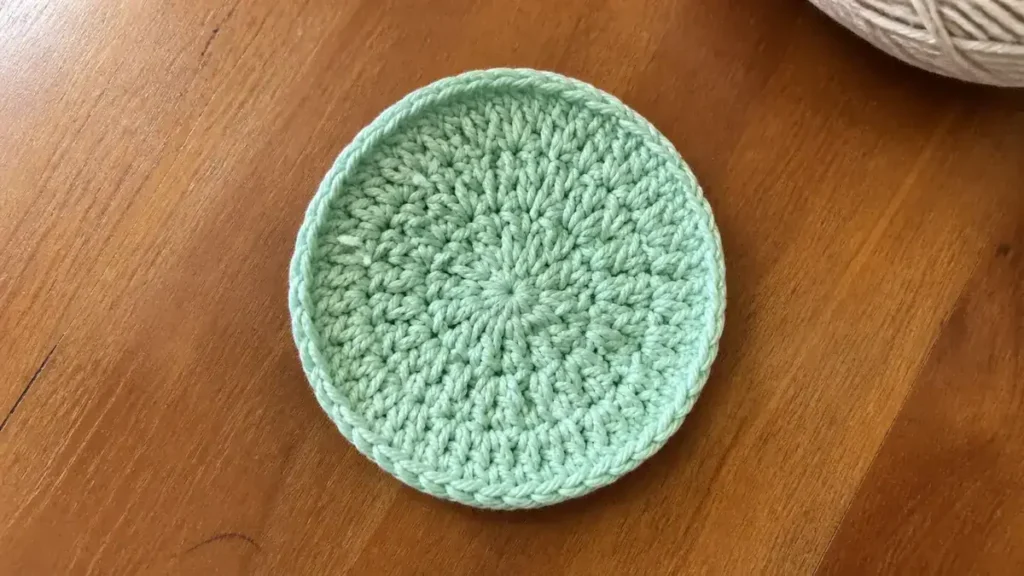
One small circle of cotton that survives the washing machine. That was the whole project: a washable face scrubby to replace the disposable cotton rounds I kept buying on autopilot. It takes a few minutes per round, and one skein yields eight to ten of them, so it doubles as a stash-clearing project.
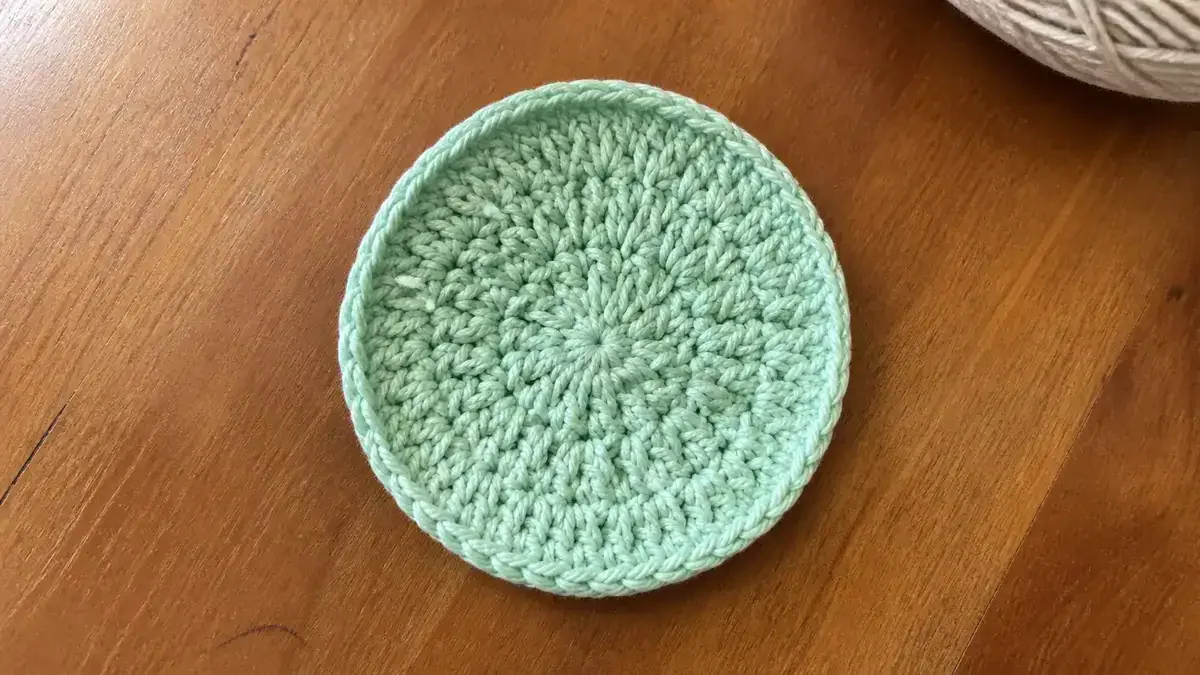
What you’re learning: working in joined rounds, counting increases, and locking a magic ring so it survives the wash. What it costs: the yarn you already have, plus nothing else. What it takes: a short evening.
Materials
- Worsted (4) weight 100% cotton yarn — about 15 yards (14 m) per scrubby
- US H/8 (5.0 mm) crochet hook
- Yarn needle and scissors
A standard 2 ounce (120 yard) skein of worsted-weight cotton — the kind sold as Lily Sugar ‘n Cream or Peaches & Creme — makes about 8 to 10 scrubbies, which keeps this firmly in the budget column. There’s no other cost line. If you’re buying yarn for the first time, cotton is the one here I would not substitute away from; more on that below.
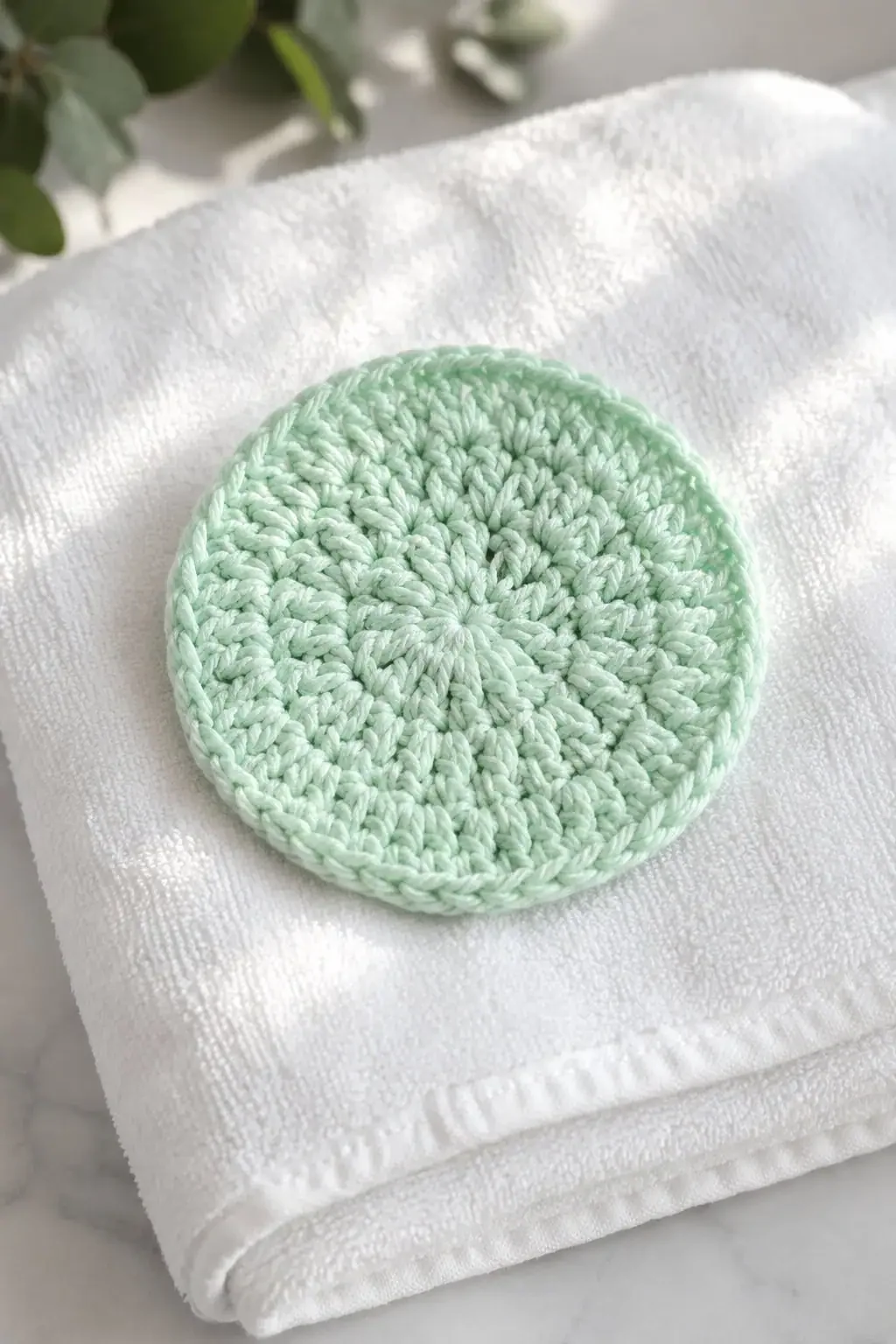
Why Cotton, and Why Not Anything Else
The fiber is the whole reason this pattern exists. 100% cotton is soft, durable, and absorbent. Acrylic doesn’t absorb and can feel scratchy on the face. Wool felts in the washing machine, and these things are going through the wash a lot.
My first attempt is in the bin, where it belongs. I started on acrylic because it was the color I wanted, and by the second round I could feel the difference in my hands. I ripped it out and restarted on cotton. Ripping it out took longer than the scrubby itself, but that’s the tuition for this lesson.
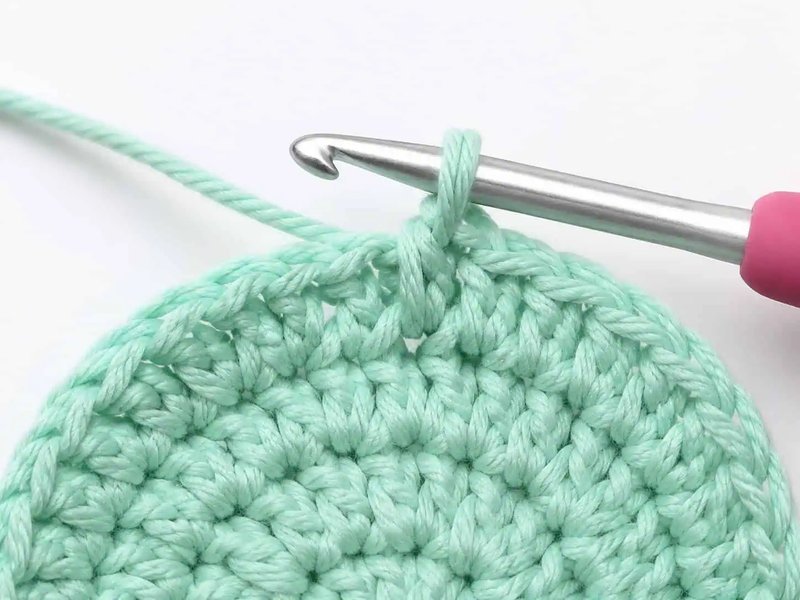
One more thing before you start: the chain at the beginning of each round doesn’t count as a stitch. Work your first stitch into the same space as the chain, and skip the chain when you join. Miss that and every round after will be one stitch off.

The Pattern
Worked in joined rounds. Stitch counts are at the end of each round.
Foundation
Make a magic ring (MR).
Body
Rnd 1: Ch 2, 8 hdc in MR, pull tail tight to close the ring, sl st to first hdc to join. (8 sts)
Rnd 2: Ch 2, 2 hdc in each st around, sl st to first hdc to join. (16 sts)
Rnd 3: Ch 2, *hdc in the next st, 2 hdc in the next st; rep from * around, sl st to first hdc to join. (24 sts)
Rnd 4: Ch 1, *sc in the next 2 sts, 2 sc in the next st; rep from * around, sl st to first sc to join. (32 sts)
Finishing
Fasten off. Weave in all ends securely — and this is the part that matters for the wash. Weave the magic ring tail back and forth through the center stitches at least three times so it locks in place and doesn’t unravel.
If Yours Won’t Lie Flat
If the scrubby curls up into a bowl instead of laying flat, your tension is probably too tight. Try going up half a hook size, to 5.5 mm. Curling can also happen if you skipped an increase somewhere — double-check your stitch counts at the end of each round.
Washing is the part people worry about. Toss it in a mesh laundry bag, wash it with your regular towels on a warm or hot cycle, and tumble dry on low. Drying flat helps it keep its shape longer.
Make It Your Own
Want it bigger for a washcloth? Keep going with the flat circle increase formula for a few more rounds — for example, Rnd 5: sc 3, inc. Want to hang it in the shower? Before fastening off at the end of Round 4, ch 10 and sl st back into the same stitch. Want it rougher? Work Round 3 in the Back Loop Only (BLO).
What I’d Do Differently
Two things. I’d check the fiber first and buy cotton before I buy color, so I don’t end up with a pretty scrubby I can’t put on my face. And I’d make two at once — once the rounds are in your hands, the second one takes almost no extra time, and one for the sink and one for the shower is how these end up being used.
They also look good tied up with some twine or ribbon as a gift, which makes eight to ten from one skein a very sensible gift basket filler.
Lesson Card
- Time: a short evening for the first one, a few minutes per round after that
- Cost: about 15 yards (14 m) of 100% cotton yarn per scrubby — a fraction of a skein
- Level: beginner
That’s the lesson.